
Make the transition visible.
Set one cue for when you need to start switching—not only for the final deadline. Put the next physical action in the label: “Close laptop and find shoes” is more useful than “Leave soon.”
Practical tools for real-life ADHD moments
Our digital rhythm tools turn chaotic routines into clear, visual next steps your ADHD household can actually follow. Open the layout, find the next small action, and keep moving without carrying every reminder in your head.
No streaks. No perfect routine. No fresh planner required.
One cue, placed at the point of action.
New: Module 2
For the appointments and meetings that actually keep you up at night.
Module 1 helps with the everyday grind — mornings, homework, bedtime. Module 2 is for the occasional moments that hit different: the school meeting, the diagnostic appointment, the conversations where you really want to walk in prepared.
Why this works
Get the tools
Same visual-schedule approach as the free guide above, built out as a printable tool you can use today.
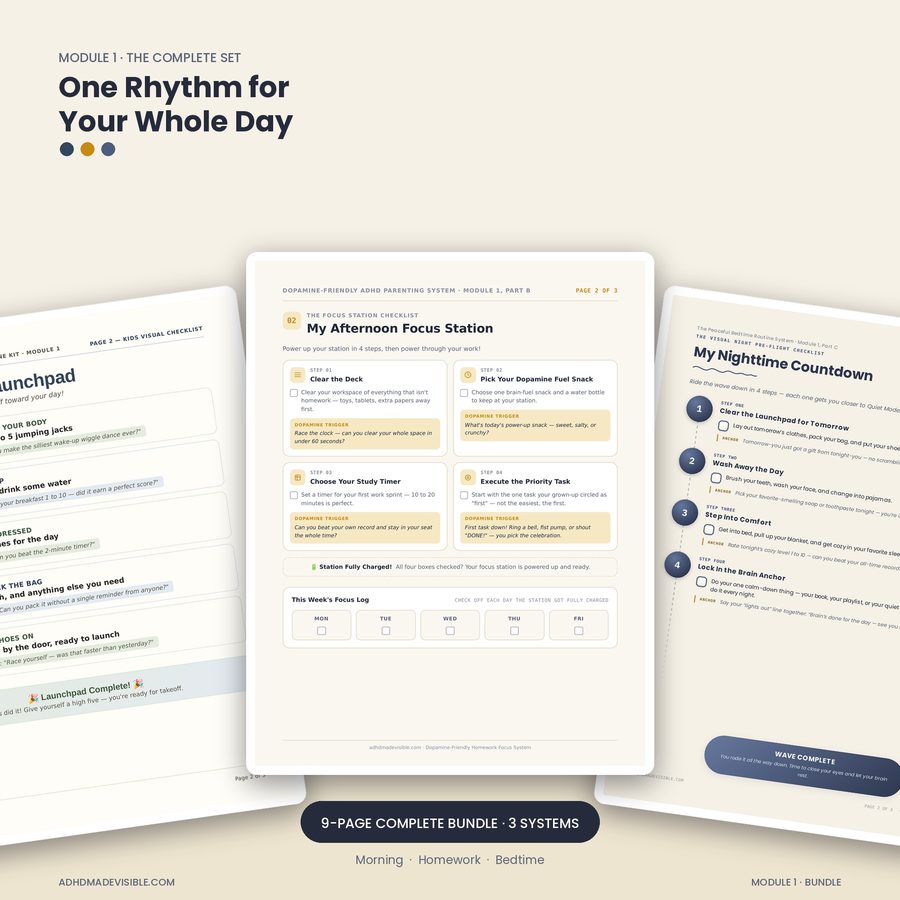
All three routines — morning, homework, and bedtime — in one bundle.
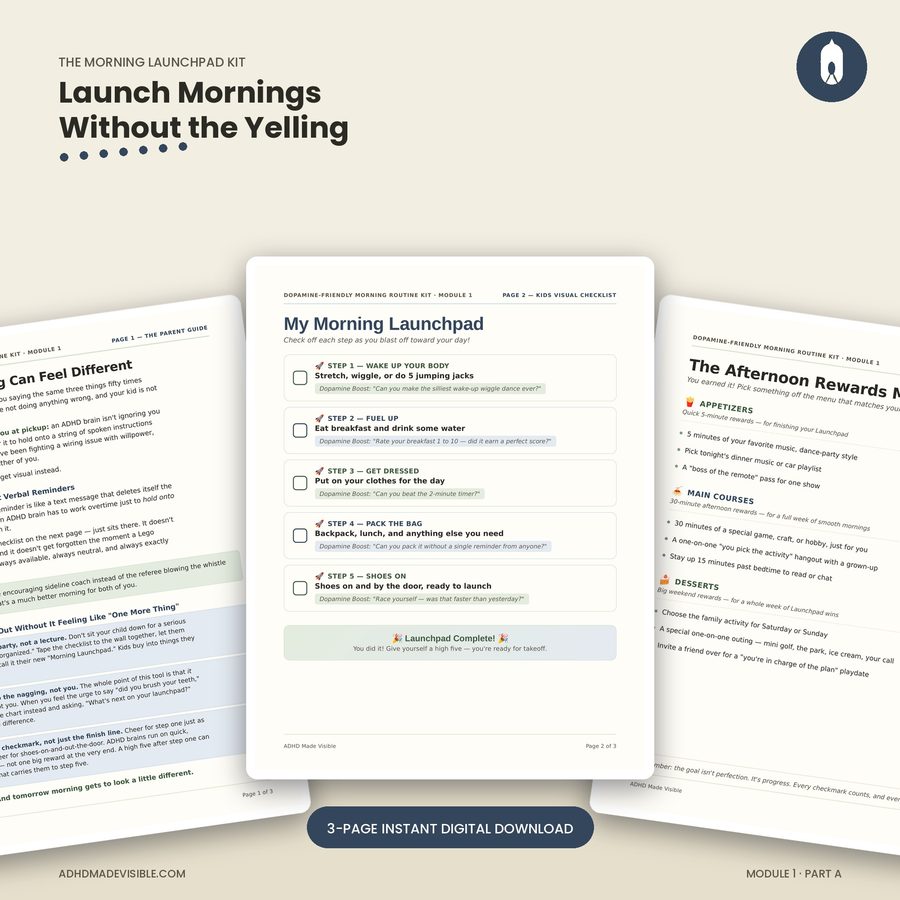
One visible landing spot and a short exit scan so leaving the house stops being a fight.
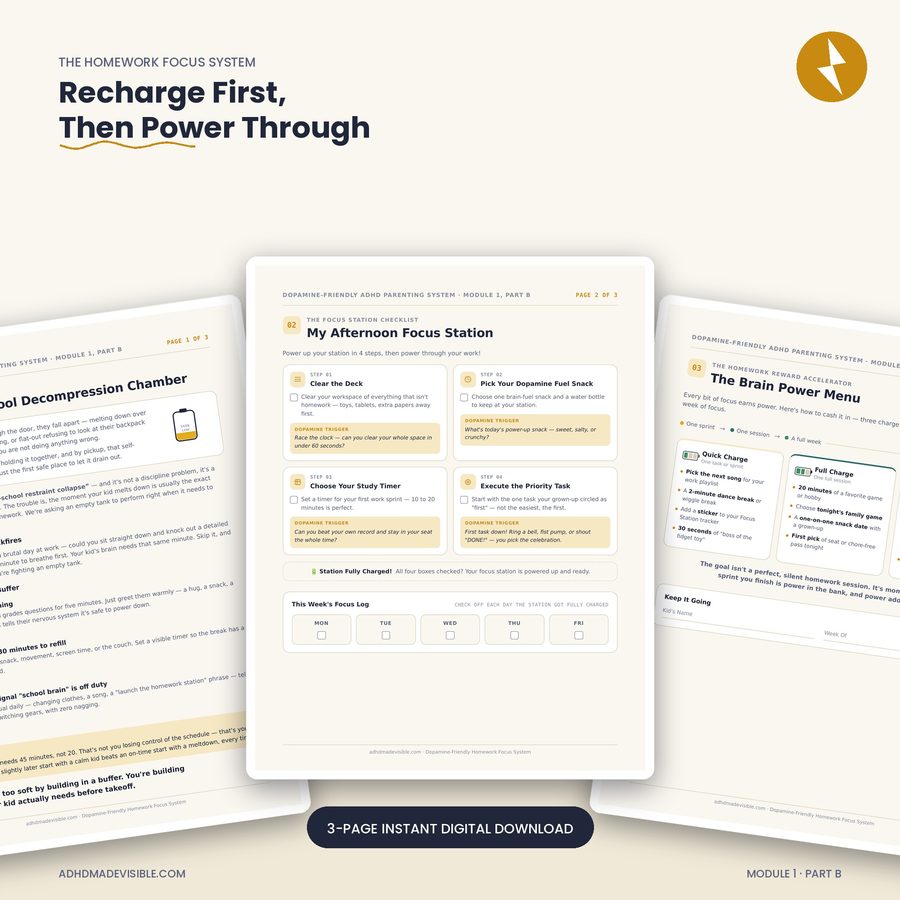
A start-to-finish visual routine that shrinks homework into steps small enough to actually begin.
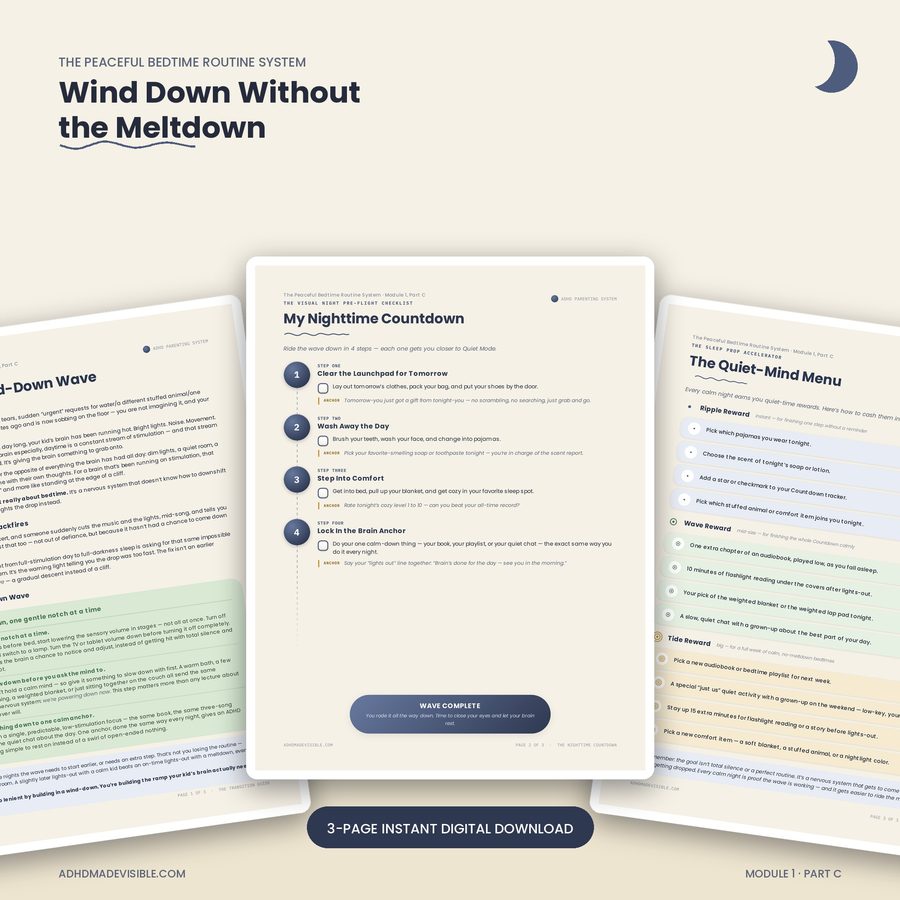
A wind-down sequence that replaces the nightly meltdown with one calm, repeatable path to bed.
Start with today
You don’t need to rebuild your whole life. Pick the moment that’s loudest right now.
Shrink the first move until it feels almost too easy.
Show me a first stepPut the transition in view before it becomes an emergency.
Show me a first stepGive essentials one visible home and use a short exit scan.
Show me a first stepReturn with the smallest version. No catch-up required.
Show me a first stepThe Make It Visible starter guide
Grab a note, index card, or the back of an envelope. Ten useful minutes beats a color-coded system you’ll never finish setting up.
Be specific: “leaving for school,” not “mornings.”
Keep it observable: shoes on, bag packed, keys in hand.
List every decision, object, and transition the moment asks you to remember.
Put one cue where the action happens—not in an app you have to remember to open.
Decide what still counts on the hard day. Smaller is a strategy.
Set one cue for when you need to start switching—not only for the final deadline. Put the next physical action in the label: “Close laptop and find shoes” is more useful than “Leave soon.”
Skip the cleanup, the apology, and the heroic new plan. Ask: “What’s the smallest version that helps today?” Do that version once. You’re back.
The ADHD Launch Pad
The first complete example of our approach is simple on purpose: one visible landing spot, a night-before reset, and a short exit scan. It’s not a planner or a life overhaul. It’s support for one recurring transition.
We’ll only offer the toolkit when the complete, usable version is ready.
Free guides
Our standards
Examples before blanks. You’ll see a realistic filled example before we ask you to customize a tool.
No shame mechanics. No streaks, scolding, failure language, or forced fresh starts.
Evidence without overpromising. We separate established information, practical suggestions, and professional guidance.
Educational information only. ADHD Made Visible does not provide medical care, diagnosis, or individualized treatment advice.